You asked: What is psyllium? Let's clear things up
Psyllium is a popular fiber supplement made from the seed husks of Plantago ovata, a type of plantain plant. It comes primarily from India, where the plant grows naturally and is also cultivated. So why has this humble husk been getting so much attention lately? And what makes it useful both as a supplement and in the kitchen?
How psyllium works in your digestive system
Psyllium is rich in soluble fiber, which can absorb large amounts of water. When it meets liquid, it forms a gel-like substance in your digestive tract. That doesn't work against digestion—it helps slow things down, keeps you feeling full, and makes it easier for stool to move through your intestines.
Psyllium is a natural fiber supplement that can support digestion, help manage blood sugar, and improve gluten-free recipes. That's a pretty versatile pantry item.
Research suggests that this gel-forming effect helps support healthy blood sugar and cholesterol levels, in part by slowing the absorption of certain nutrients, including sugars. One study indexed in PubMed, for example, found that regular psyllium intake can improve blood lipid levels.
What can psyllium help with?
Psyllium may help manage or prevent several common issues:
Digestive health — Psyllium is often recommended for people with constipation, irritable bowel syndrome (IBS), or diverticulosis. Another study indexed in PubMed found that adding psyllium improves bowel regularity and helps prevent chronic constipation.
Blood sugar management — Taking psyllium before a meal may help reduce sharp blood sugar spikes in people with type 2 diabetes by slowing absorption in the digestive tract.
Feeling full — The soluble fiber in psyllium expands in the stomach, helping you feel satisfied and making it easier to manage how much you eat.
Heart health — By helping lower LDL, or "bad," cholesterol, psyllium supports cardiovascular health.
Psyllium in the kitchen: More than a supplement
Beyond its health benefits, psyllium has become a star in gluten-free baking and health-conscious kitchens. Its ability to form a gel makes it a useful stand-in for some of the structure that gluten or eggs provide in baked goods.
If you're making gluten-free bread, cakes, or even pizza dough, psyllium can improve texture and help everything hold together. It's a plant-based, readily available option for anyone avoiding gluten or eggs.
How do you take psyllium?
There are several ways to use it:
As a supplement — Stir a teaspoon of psyllium into a glass of water, drink it promptly, then follow with more water. Getting enough fluid is essential, not optional.
In food — Add psyllium to smoothies, yogurt, oatmeal, or even soups.
In baking — Add psyllium to recipes to improve their texture and structure.
Are there side effects?
Psyllium is generally considered safe, but the amount you take and how much water you drink matter. Taking too much, especially without enough liquid, can cause bloating or an uncomfortable feeling of fullness.
Psyllium pros and cons: A quick rundown
Psyllium is one of the most extensively studied fiber supplements. But like any supplement, it has benefits and a few things you should know before getting started.
The main benefits
- Better digestion and constipation relief — Its soluble fiber softens stool and helps it move through the intestines.
- Blood sugar and cholesterol support — Slows carbohydrate absorption and helps lower LDL cholesterol.
- Feeling satisfied — May support weight management and help cut back on between-meal snacking.
- A stand-in for gluten and eggs in baking — Adds structure and flexibility to vegan and gluten-free baked goods.
The downsides to know
- Bloating and gas during the first few days — Your gut may need time to adjust to the extra fiber.
- Plenty of water is a must — Without enough fluid, psyllium can backfire and make constipation worse.
- Medication interactions — It may slow the absorption of certain medications. Separate it from medications by at least two hours, and confirm the timing with your pharmacist.
- It's not for everyone — If you have intestinal narrowing or trouble swallowing, talk to your doctor before using it.
How much psyllium should you take each day?
A commonly used daily amount is 5–10 g (about 0.18–0.35 oz), divided throughout the day. That's roughly one to two teaspoons, though the weight per teaspoon varies by product, so check the label. Always mix it into a full glass of water—at least 250 ml (about 1 cup)—and drink it right away, before it thickens into a gel.
When should you take psyllium? About 30 minutes before a meal if your goal is fullness and blood sugar support, or in the evening if you're working on bowel regularity. Avoid taking it immediately before lying down. Start with a small teaspoon and increase gradually over a week, following your product's directions.
Psyllium powder vs. psyllium husks: What's the difference?
Both come from the same plant—Plantago ovata—but they don't behave exactly the same way:
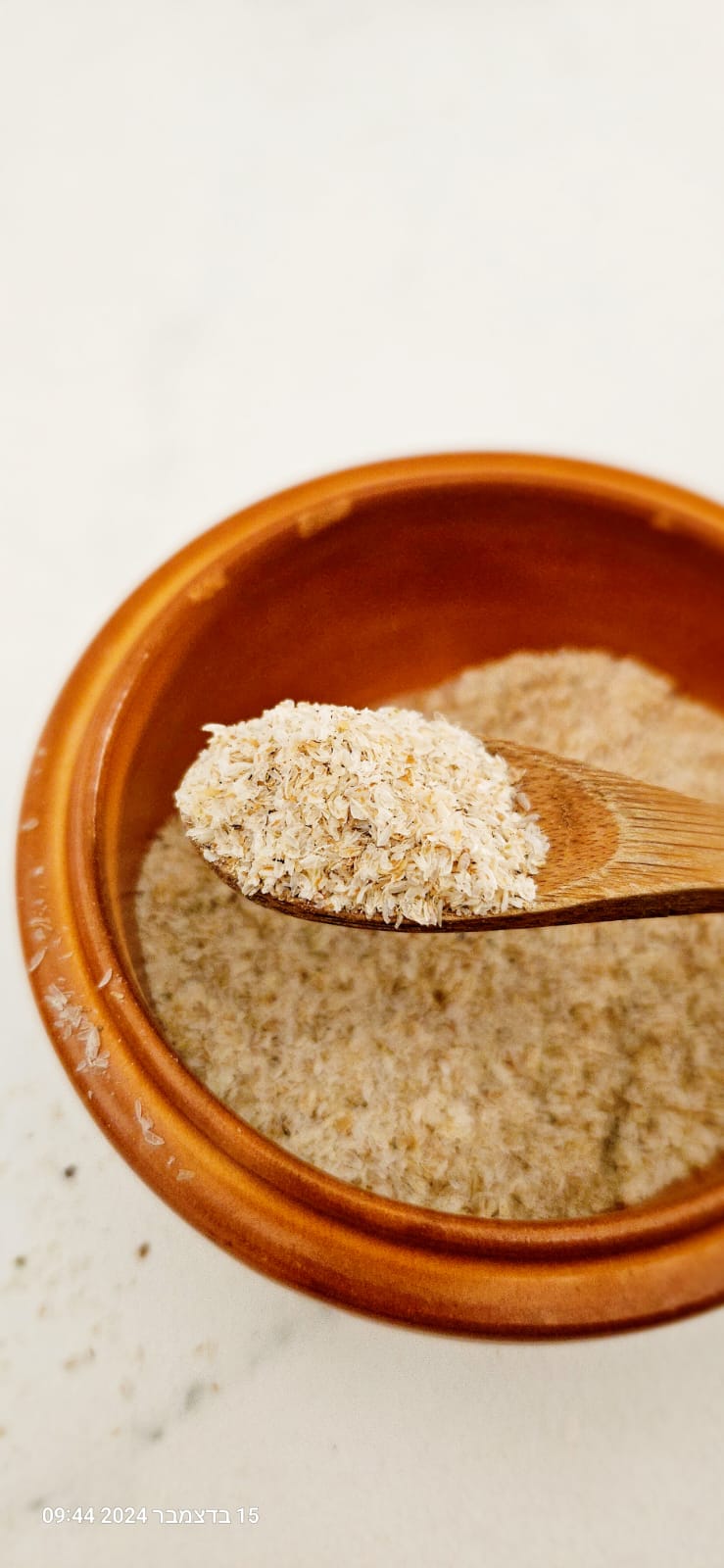
- Whole psyllium husks — The coarser outer husks of the seeds. Great for baking and adding structure.
- Psyllium powder — Husks ground into a fine powder. Mixes more evenly with water and is convenient as a daily supplement.
In my recipes on the site, I specify which form to use. Swapping one for the other can change the texture dramatically.
Baking with psyllium: Recipes and kitchen uses
Psyllium completely changed my vegan baking. It gives gluten-free, egg-free baked goods the stretch and flexibility they're so often missing. Here are a few examples from my kitchen:
- Vegan gluten-free bread — A teaspoon of psyllium for every 200 g (7 oz) of flour helps create a loaf that holds together instead of crumbling.
- Gluten-free pizza — Helps make dough you can stretch and roll without tearing.
- An egg substitute — One teaspoon of psyllium + 3 tablespoons of water = one "psyllium egg."
- Vegan patties and burgers — Binds the mixture without matzo meal (ground unleavened bread) or breadcrumbs.
Out of psyllium? Common baking substitutes
If you run out of psyllium halfway through a recipe, a few alternatives can come to the rescue. They're not perfect matches, but they can save the day:
- Ground chia seeds — A close option at a 1:1 ratio; they also form a gel.
- Ground flaxseed — Use a 1:1 ratio. The texture is a little different, but it binds well.
- Xanthan gum or guar gum — Use just one-quarter of the amount. Best suited to gluten-free baking.
- Agar-agar — Useful for desserts and gels, but less suitable for bread.
Frequently asked questions about psyllium
What is psyllium called in Hebrew?
Psyllium is the soluble-fiber-rich husk of the seed of Plantago ovata. On Israeli labels, you may see terms that translate to "Indian plantain seeds" or simply "psyllium husks."
Is psyllium dangerous?
For most people, psyllium is considered safe for long-term use when taken with enough water and within the recommended dose. If you take regular medications, have an intestinal condition, or are pregnant, check with your doctor before starting.
Where can you buy psyllium in Israel?
Psyllium is available at most health food stores and pharmacies, at Victory (an Israeli supermarket chain) and Tiv Ta'am (an Israeli grocery chain), and online through sites such as iHerb and Amazon. Check whether you're buying powder or whole husks—the right choice depends on how you plan to use it.
Is psyllium kosher for Passover?
Psyllium itself is not chametz (leavened grain products prohibited during Passover) or kitniyot (foods such as legumes that some Jewish communities avoid during Passover), but a product's Passover status depends on its specific kosher certification. Always check the package for a "kosher for Passover" seal.
How long does psyllium take to work?
For bowel regularity, usually 12–72 hours after the first dose. Meaningful effects on cholesterol and blood sugar generally require consistent use for 4–8 weeks.