10 things you didn't know about peas
In collaboration with Harduf
1: An average pea weighs between 0.1 and 0.36 g.
2: Peas are one of the oldest crop plants domesticated by humans in the Middle East. They were domesticated during the same era as wheat, rice, and corn.
3: Peas are green because they are harvested while still unripe. Ripe peas are characterized by a more yellowish color. Eating green peas became fashionable in the 1600s and 1700s, though the French at the time described it as a "madness."
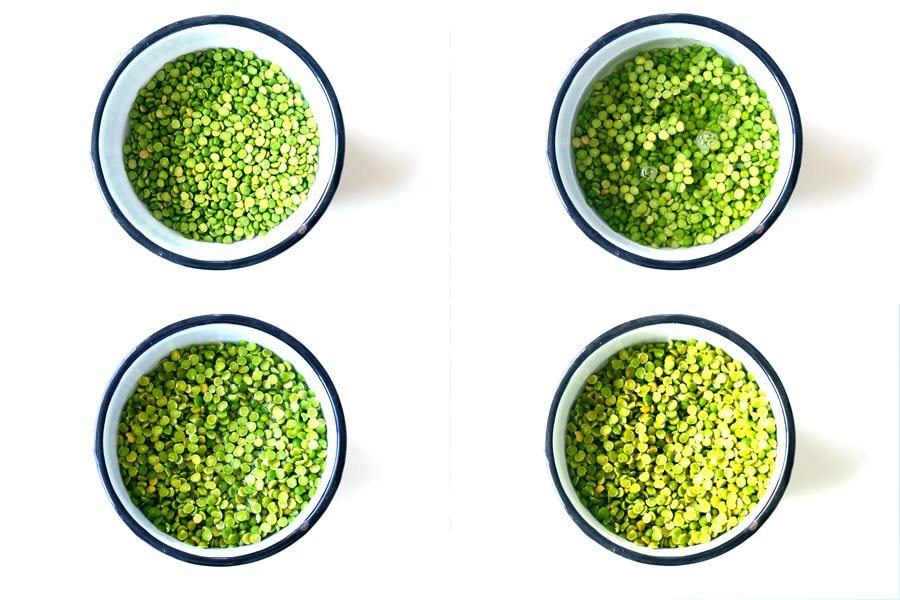
4: Only five percent of the peas grown are sold fresh. The rest are frozen or canned.
5: In 100 kcal of frozen or fresh peas (about three-quarters of a cup), there is the same amount of protein as in one egg.
6: In the mid-19th century, scientist Gregor Mendel observed pea pods, which led him to create the principles of Mendelian genetics, the foundation of modern genetics.
7: It was only in the 16th century that people discovered peas could be eaten fresh. Until then, they were consumed dried.
8: Dried peas dry naturally on the plant and are harvested in the summer, while fresh peas are harvested in the spring.
9: Peas have been the most frozen vegetable in the world since the invention of the home freezer in the 1920s.
10: The English fairy tale "Jack and the Beanstalk" (historically linked to peas/beans) has seen at least 5 film versions since it was first published in 1807.
Comparison between Dried Peas and Frozen Peas
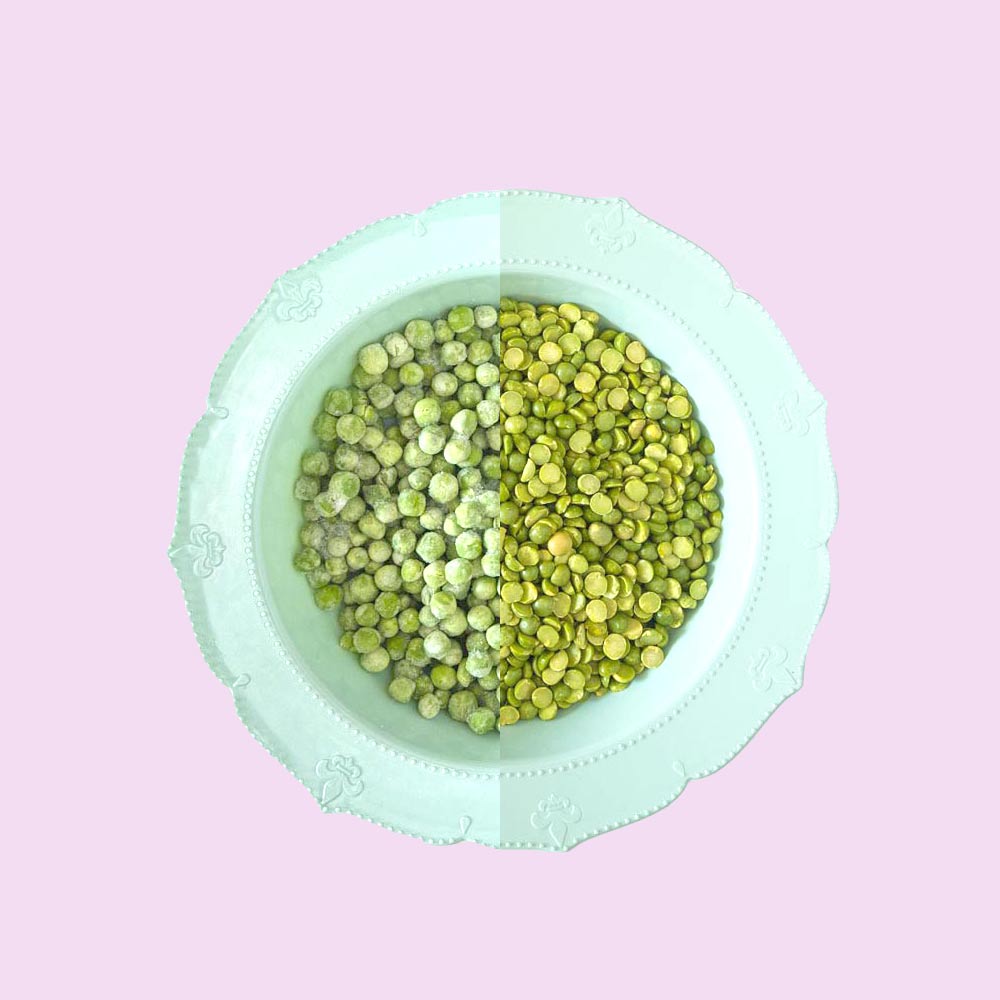
I compared 100 g (3.5 oz) of dried peas and 100 g (3.5 oz) of frozen peas, both from Harduf (who also contributed to this article).
| Dried Peas | Frozen Peas | |
| Calories (kcal) | 302 | 73 |
| Protein (g) | 22.9 | 6.9 |
| Carbohydrates (g) | 41.2 | 10.5 |
| Fat (g) | 1.4 | 1.5 |
| Dietary Fiber (g) | 16.6 | 5.1 |
The differences are due to moisture content and changes in pea volume (similar to the difference between a dry product and a cooked one).
Health Benefits
Legumes, including peas, are essential components of the human diet due to their starch, protein, and other nutrient content.
These health benefits stem primarily from the concentration and properties of starch, protein, fiber, vitamins, minerals, and phytochemicals in peas.
Fiber from the seed coat contributes to digestive function and health, reducing the digestibility of the starch in peas.
The intermediate amylose content of pea starch also contributes to its low glycemic index and reduced starch digestibility.
The vitamin and mineral content of peas may play important roles in preventing deficiency-related diseases, particularly those associated with selenium or folate deficiency.
Peas contain a variety of phytochemicals once considered "anti-nutrients" (natural or synthetic compounds that interfere with nutrient absorption, such as phytic acid, oxalic acid, etc.).
These include polyphenols in the seed coats, which have antioxidant and anti-carcinogenic activities, and galactose oligosaccharides (a type of sugar) which may exert beneficial prebiotic effects in the large intestine. For example: a 2017 observational study conducted on mice found that green peas protect against colitis in a high-fat diet.
Another study evaluated the effects of hypocaloric diets (legume-based) on metabolic and inflammatory changes accompanying weight loss.
The result: Consuming legumes (such as peas) at about 4 servings per week led to a reduction in pro-inflammatory symptoms and significant improvement in metabolic traits (lipid profile and blood pressure) among overweight study participants.
Sources:
https://www.ncbi.nlm.nih.gov/pubmed/22916813
https://www.ncbi.nlm.nih.gov/pubmed/28524086
https://www.ncbi.nlm.nih.gov/pubmed/20499072
Want a recipe for tofu patties with artichoke?