The Story Behind the Recipe
Iron is essential for keeping your body running properly. Did you know that iron deficiency is one of the most common nutrient deficiencies among athletes, especially female endurance athletes? Iron helps carry oxygen from your lungs to your body's cells, supports the removal of cellular waste, and plays a role in enzyme reactions that produce energy. When working muscles don't get enough oxygen, muscle tissue can suffer.
You also lose iron through sweat. During a particularly sweaty workout, athletes lose more than fluids—they lose minerals, including iron.
Endurance athletes need to produce significantly more red blood cells, which increases the body's demand for iron. For endurance athletes with high training volumes, iron needs can be up to 70% higher. Iron deficiency can lead to anemia, increased fatigue, and impaired immune function—all things that can get in the way of training and performance.
Here's another piece of the puzzle: plant-based iron isn't always absorbed efficiently, so vegan endurance athletes may need higher amounts. The daily targets discussed here are about 32 mg of iron for women and 15 mg for men—1.8 times the amounts for athletes who aren't vegan. Individual needs vary.
You can help improve iron absorption by:
1. Pairing iron-rich foods with foods rich in vitamin C, such as tomatoes, bell peppers, cabbage, citrus fruit, kiwi, and strawberries. Foods rich in carotenoids can help, too: think carrots, sweet potatoes, pumpkin, bell peppers, lettuce, spinach, tomatoes, and more.
2. Using soaking, cooking, and sprouting where appropriate for seeds, nuts, and leafy greens. These foods can contain phytic acid, oxalic acid, and other compounds that make digestion and iron absorption more difficult; preparation methods can help reduce some of those compounds.
3. Leaving about half an hour between eating iron-rich foods and drinking beverages high in polyphenols, such as green tea and strong herbal teas, as well as caffeinated drinks.
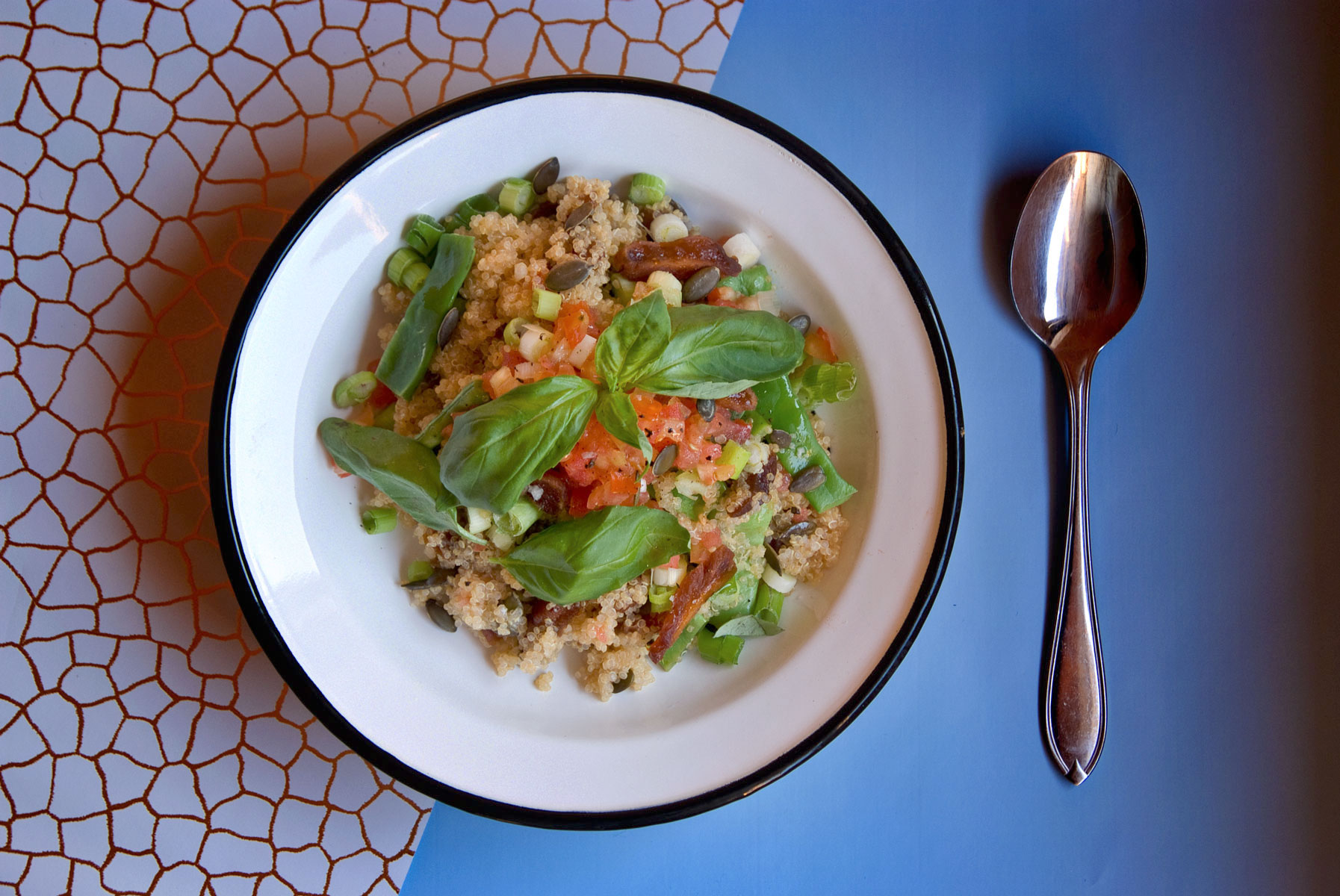
This salad delivers a solid amount of iron thanks to ingredients such as dried apricots, quinoa, green beans, and pumpkin seeds. I've also added chopped tomato for vitamin C, which helps your body absorb the iron.
The salad provides 6 grams of protein, 260 calories, and a respectable 3 mg of iron. It's a good addition to a daytime meal, with plenty of fiber and zinc. Its protein content is relatively modest, though, so round it out with a serving of a good-quality plant protein.
Ingredients
2 servings
- 1 cup cooked quinoa
- 4 dried apricots (choose brown, unsulfured apricots rather than bright yellow ones treated with sulfur dioxide)
- A handful of chopped celery
- 1/2 cup green peas, blanched in boiling water for 3–4 minutes
- 1 tablespoon pumpkin seeds
- 2 tomatoes, chopped
- A handful of basil
- 2 scallions
- 1 tablespoon lemon-infused olive oil
- A little coarse salt and freshly ground pepper
With contributions from Tami Adiv (an Israeli nutritionist).
Quinoa and Dried Apricot Salad