Oatmeal Bread Without Kneading or Rising
This recipe has been making the rounds online for years, especially outside Israel. It's a favorite among Dutch and German bloggers. (Yes, I read blogs in German sometimes.)
They've given it the very modest name "life-changing bread," and honestly? I'm on board. There's something pretty special here.
I love baking bread at home, but I know it can turn into a project that takes skill, time, and patience. That's why I'm always happy to find bread recipes that don't involve rising, yeast, or kneading.
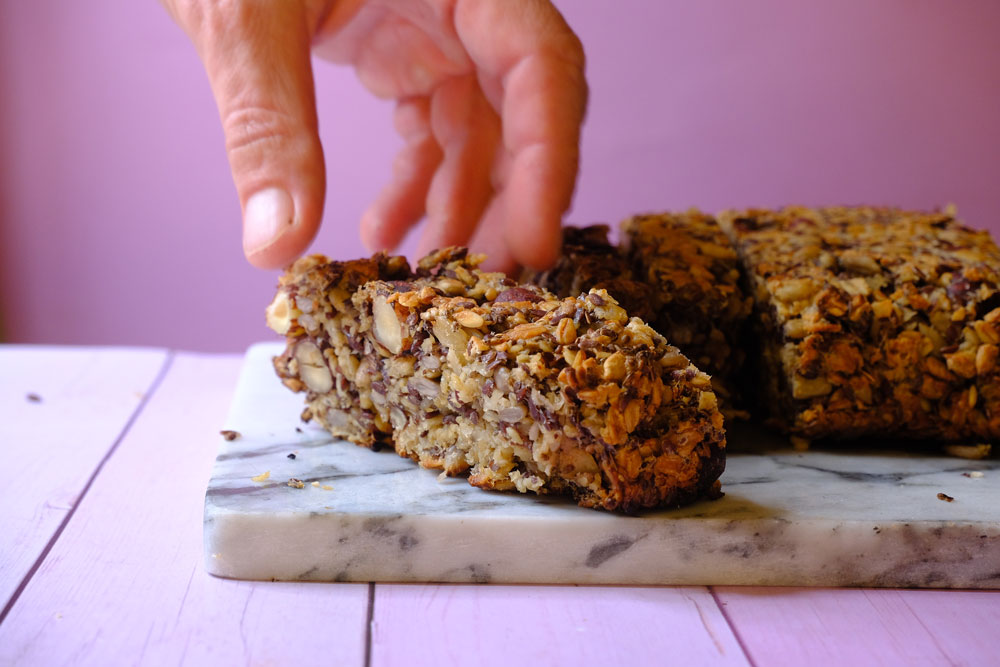
This oatmeal bread has no flour at all. It's packed with seeds and a few nuts, with a pleasantly sweet flavor. Best of all, it's incredibly easy to make.
Now, I know what you're thinking: it looks and feels more like a cake than a loaf of bread. But that doesn't mean you can't dig into it on a Saturday morning. Did somebody say brunch?
Nutritionally, this bread has plenty going for it: fatty acids such as omega-3s, fiber that helps you feel full and supports blood sugar balance, and a range of vitamins and minerals. A lot of good stuff in one loaf, if you ask me.
A Few Things to Know About This Oatmeal Bread
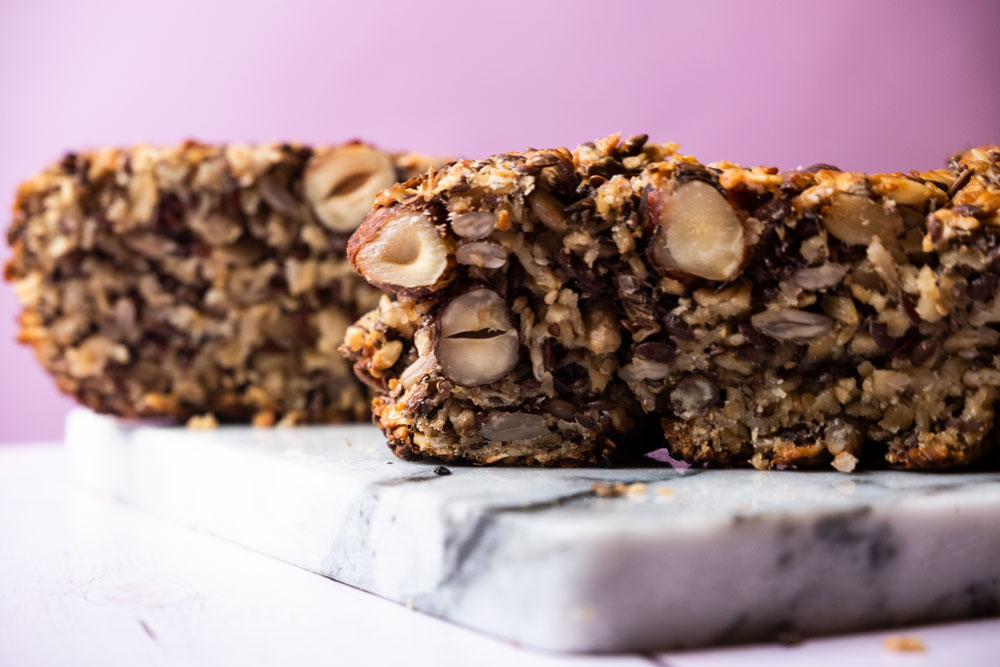
The original recipe calls for psyllium seeds to help bind everything into a cohesive dough. I skipped them because I don't like asking you to hunt down ingredients you have no idea where to find. The mixture held together nicely anyway.
The base of this recipe is quick-cooking oats.
(I used oats from Harduf, an Israeli organic food brand, which also helped support this post. Thank you! That support helps keep quality content coming on this blog.)
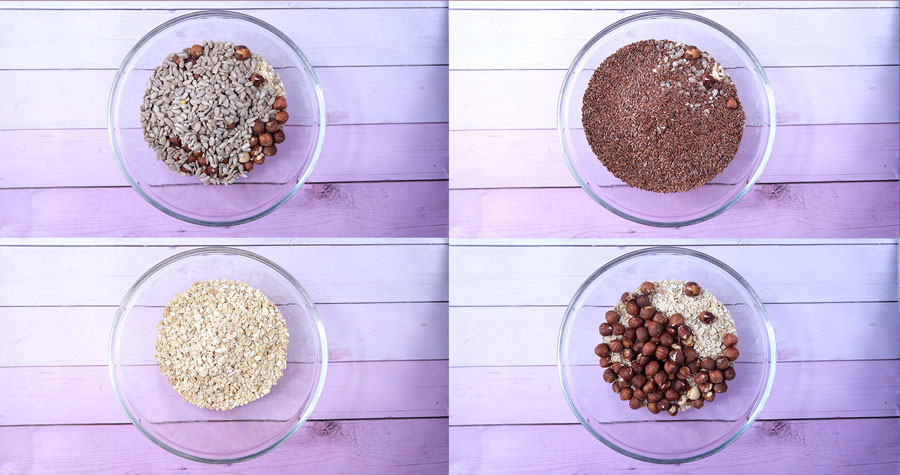
A quick tip: grind half the oats and flaxseeds into a flour in a spice grinder. Grinding the flax also helps your body absorb its omega-3s. This gives the loaf a more bread-like, less cake-like texture.
As for the add-ins, I put them in two camps: the nonnegotiables and the ones you can swap or leave out.
The essentials—the ones you absolutely cannot skip—are flaxseeds and chia seeds.
They're what bind the mixture together. Without them, the bread will fall apart.
The other add-ins are flexible. Swap in whatever seeds you like: pumpkin seeds, nigella seeds, or even sesame seeds.
Many versions of this bread call for letting the dough sit for 12 to 24 hours to encourage natural fermentation and create a lighter loaf. I added a teaspoon of baking powder instead. I didn't find enough of a difference to justify waiting a whole day. Your call.
Nutrition Information from Noam Bachar (an Israeli clinical dietitian and fitness trainer):
One 35 g (1.2 oz) slice, from a loaf cut into 15 slices, contains:
- 150 calories
- 5 g protein
- 12 g carbohydrates
- 9 g fat
Want another life-changing bread recipe? How about bread made with raw buckwheat?
Oatmeal Bread
A quick-to-mix oatmeal bread with no yeast and no kneading.
Ingredients
- 1.5 cups Harduf quick-cooking oats 188 g (6.6 oz)
- 0.5 cup hazelnuts 50 g (1.8 oz)
- 0.5 cup flaxseeds
- 0.5 cup sunflower seeds 65 g (2.3 oz)
- 2 tablespoons chia seeds 25 g (0.9 oz)
- 1 teaspoon salt
- 0.5 teaspoon baking powder
- 3 tablespoons oil (I used walnut oil; olive oil works beautifully, too) 30 ml (1 fl oz)
- 1 tablespoon silan (date syrup) 22 g (0.8 oz)
- 1.5 cups water 360 ml (about 1.5 cups)
Instructions
-
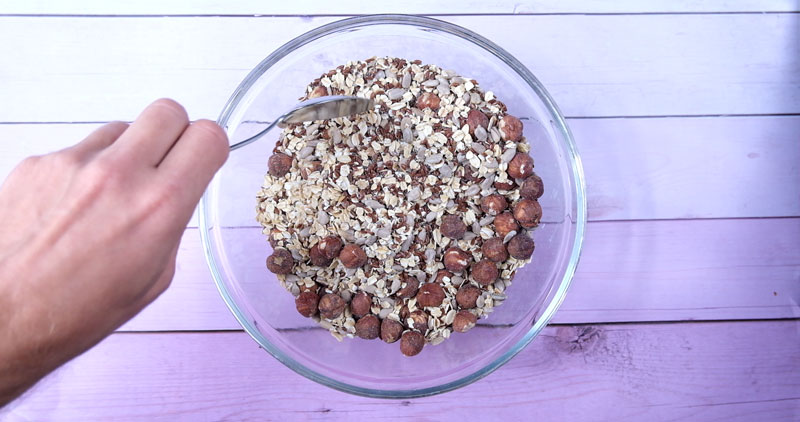
Combine all the dry ingredients in a deep mixing bowl and stir thoroughly.
-
In another bowl, combine all the wet ingredients and mix well.

-
Add the dry ingredients to the wet ingredients and stir until evenly combined.
-
Let the bowl sit on the counter for at least half an hour and up to 24 hours so the mixture can firm up.
Baking
-
Preheat the oven to 180°C (350°F).
-
Transfer the mixture to a baking pan lined with parchment paper.
-
Bake for about 20 minutes.
-
After 20 minutes of baking, remove the bread from the pan, turn it upside down, and bake for another 40 minutes.
-
Let the bread cool completely before slicing.
Recipe Video
Made this recipe? Don't forget to tag me!