High-Protein Vegan Overnight Oats: The Ultimate Guide
Looking for a nutritious, quick, and satisfying breakfast? High-protein vegan overnight oats are your answer. They're the perfect meal prep solution to fuel your morning, support muscle growth, and keep you full for hours. This guide will show you how to easily pack 25-35 grams of protein into every jar, with or without protein powder, and provide flavor variations and troubleshooting tips to ensure you get it right every time.
The Base Ratio: Oats to Liquid
The foundation of perfect overnight oats is the ratio of rolled oats to liquid. A great starting point is a 1:2 ratio by volume. For every 1/2 cup of oats, you'll want to add about 1 cup of liquid. For example, use 1/2 cup (about 1.6 oz or 45g) of rolled oats with 1 cup (8 fl oz or 240 ml (1 cup)) of soy milk.
This ratio creates a creamy, spoonable consistency that isn't too thick. If you prefer a denser, thicker texture, you can reduce the liquid to a 1:1.5 ratio (e.g., 1/2 cup oats to 3/4 cup liquid). Remember that add-ins like chia seeds and yogurt will also absorb liquid and make the final product thicker.
How to Get 25-35g of Protein (Without Powder)
You don't need protein powder to create a high-protein breakfast. By choosing the right whole-food ingredients, you can easily hit your protein goal. Here’s a sample combination:
- Rolled Oats (1/2 cup): ~6g protein
- Soy Milk (1 cup): ~7g protein
- Soy Yogurt (2/3 cup or 150 g (5.3 oz)): ~6-7g protein
- Hemp Hearts (2 tbsp): ~6g protein
- Peanut Butter (1 tbsp): ~4g protein
Total: ~29-30 grams of protein!
Another fantastic, high-protein mix-in is silken tofu. It has a neutral flavor and blends seamlessly into the oats, creating an incredibly creamy, pudding-like texture. Blending in 1/2 cup (about 120-150 g (5.3 oz)) of silken tofu can add an extra 8-12 grams of protein.
Protein Source Comparison Table (Approx. values per 100 g (3.5 oz))
| Protein Source | Approx. Protein (g) | Notes |
|---|---|---|
| Silken Tofu | ~8g | Creates a very creamy, rich texture |
| Soy Yogurt | ~4-5g | Adds tanginess and creaminess |
| Soy Milk | ~3g | Excellent high-protein liquid base |
| Hemp Hearts | ~31g | A protein powerhouse |
| Chia Seeds | ~17g | Thickens the mixture significantly |
| Peanut Butter | ~25g | Adds flavor and healthy fats |
Using Vegan Protein Powder
The simplest way to boost protein is by adding a scoop (about 30g) of your favorite vegan protein powder. Soy, pea, or a plant-based blend will typically add 20-25 grams of protein and help thicken the oats. If you add protein powder, you may need to add an extra splash of liquid (about 1/4 cup or 60 ml (1/4 cup)) to maintain a good consistency.
Not sure which powder to choose? Check out our comparison of pea, soy, and rice proteins.
5 Flavor Variations (with Macro Estimates)
These recipes all start with a base of 1/2 cup rolled oats, 1 cup soy milk, and 1 scoop of vanilla protein powder (unless noted), yielding about 30-35g of protein.
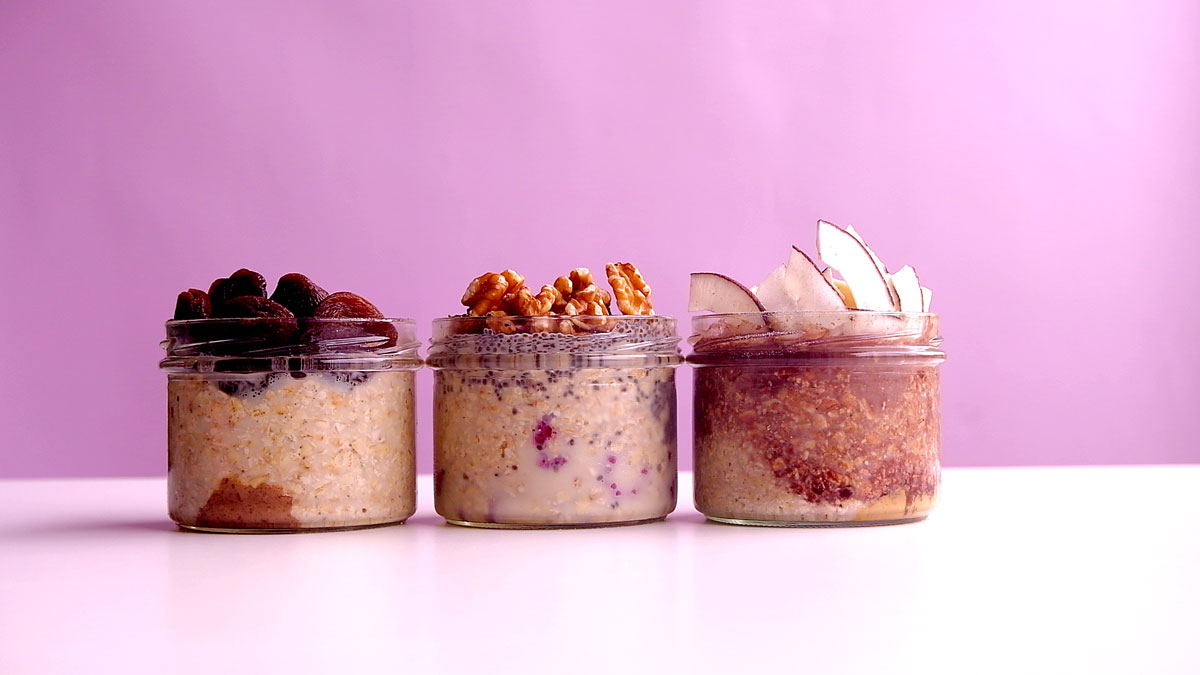
- Peanut Butter Banana: Add 1 tbsp of peanut butter and 1/2 a mashed banana. Approximate macros: ~550 calories, 35g protein.
- Chocolate Chia: Add 1 tbsp cocoa powder, 1 tbsp chia seeds, and 1 tsp maple syrup. Approximate macros: ~500 calories, 32g protein.
- Berry & Silken Tofu (No Powder): Blend 1/2 cup frozen mixed berries with 1/2 cup (120 g (4.2 oz)) silken tofu, 1/2 cup soy milk, and the oats. Approximate macros: ~400 calories, 25g protein.
- Apple Pie: Mix in 1/2 a grated apple, 1/2 tsp cinnamon, and a pinch of nutmeg. Approximate macros: ~480 calories, 30g protein.
- Coffee Cookie Crunch: Use 1/2 cup chilled coffee and 1/2 cup soy milk as your liquid base. Top with 1 tbsp of crushed Biscoff or Oreo cookies before serving. Approximate macros: ~520 calories, 30g protein.
Troubleshooting Common Issues
- Too thick? Simply stir in a splash of plant-based milk in the morning until it reaches your desired consistency.
- Too runny? Next time, either reduce the liquid slightly or add 1 tbsp of chia seeds or hemp hearts to absorb the excess moisture.
- Gummy texture? This can happen with instant or quick-cook oats. For the best texture, use old-fashioned rolled oats. They maintain a pleasant chewiness.
Frequently Asked Questions
Do you have to cook oats?
No, you don't have to cook rolled oats. Soaking them overnight softens them just as cooking would. This process also helps to break down phytic acid, an antinutrient that can interfere with the absorption of minerals like iron and zinc, making the oats easier to digest.
How long do overnight oats last in the fridge?
Stored in an airtight container like a mason jar, overnight oats will last for 4-5 days in the refrigerator. The texture is best on days 1 and 2, but they are perfectly safe and delicious for longer, making them a fantastic meal prep option.
Can I use almond milk instead of soy milk?
Absolutely, but be mindful of the protein content. A cup of unsweetened almond milk has only about 1 gram of protein, compared to about 7 grams in a cup of soy milk. If you use almond milk, you will need to add more protein from other sources (like protein powder, soy yogurt, or hemp seeds) to reach your goal.
Can you freeze overnight oats?
Yes! You can prepare individual portions in freezer-safe jars and freeze them. To thaw, simply move a jar from the freezer to the fridge the night before you want to eat it. You may need to stir in a little extra liquid to restore the creamy texture.
Want to calculate your personal daily protein needs? Try our free protein calculator. For a complete nutritional strategy, check out our high-protein vegan meal plans.