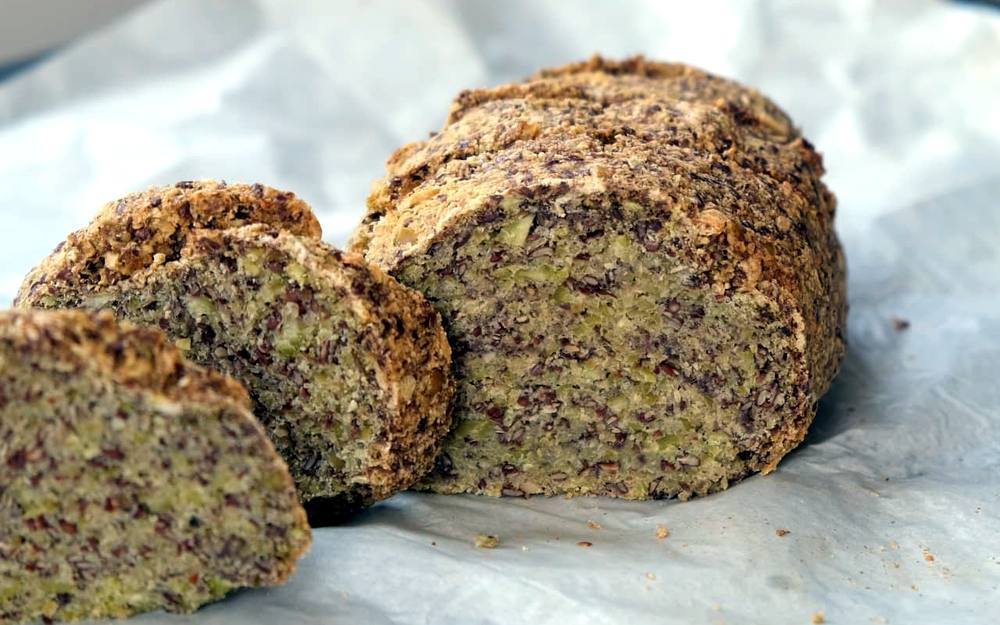
Ever since I published my green pea bread, the messages haven't stopped: "it came out wet in the middle", "can I skip the psyllium?", "why does it stick to the knife?". Almost all of these questions come down to one small ingredient without which my legume breads simply wouldn't hold their shape: psyllium. In this guide I explain what it does in the dough, why it works, and how to use it correctly.
The problem: gluten-free bread has no skeleton
In regular bread, gluten forms an elastic network. As the dough bakes, steam and gas bubbles try to escape and that network traps them. That is how you get an airy crumb and a slice that holds its shape.
Legumes have no gluten. They are rich in protein and fiber, but there is no "glue" holding everything together. Without a substitute you get one of two results: a dense, wet brick, or something that falls apart the moment you cut it.
What exactly is psyllium?
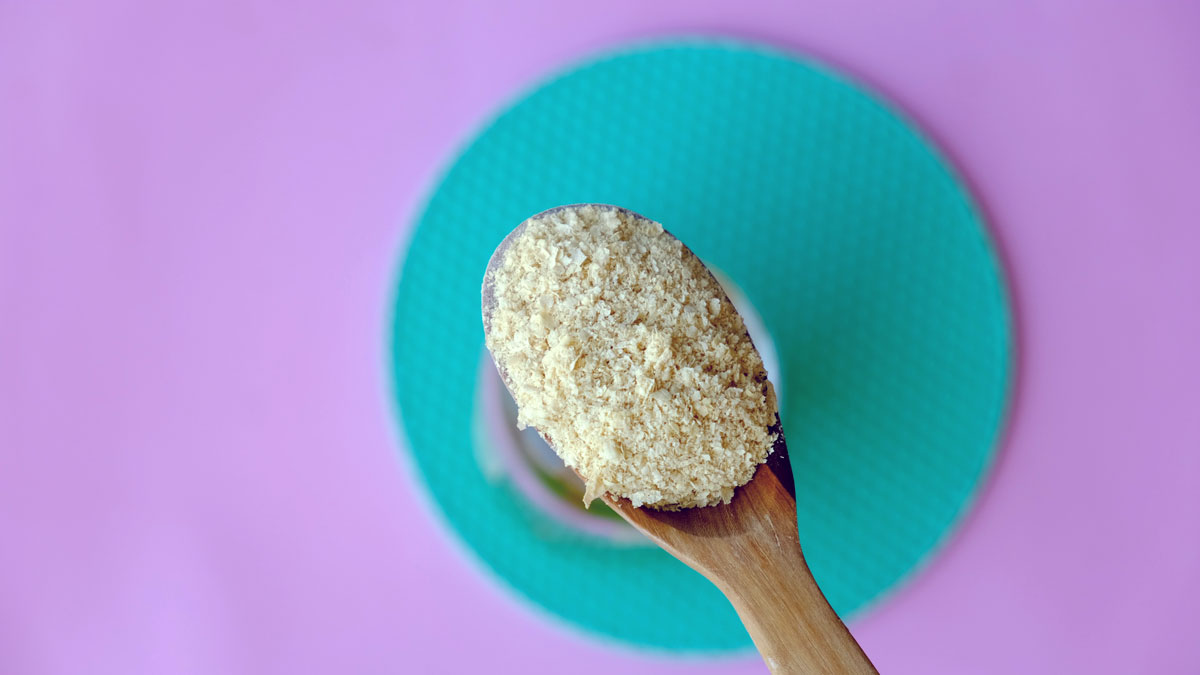
Psyllium is the husk of seeds from the Plantago plant. It is overwhelmingly soluble fiber. When it meets water it absorbs many times its own weight and turns into a thick, flexible gel (called mucilage).
In the dough, that gel does exactly what gluten does in regular bread:
- Creates a flexible network that binds the legume particles together.
- Traps steam and bubbles during baking, so the loaf rises instead of sinking.
- Holds moisture, so the bread doesn't dry out after a day.
- Lets you slice thin pieces that don't fall apart.
The common mistake: whole husks vs. powder
Psyllium is sold in two forms, and they are not interchangeable one-to-one:
- Whole husks: coarse flakes that absorb more slowly.
- Psyllium husk powder: absorbs much faster and more strongly.
Rule of thumb: 1 tablespoon of powder ≈ 1½–2 tablespoons of whole husks. If a recipe is written for whole husks and you use the same amount of powder, the dough will be dry and rubbery. The other way around, it will stay wet in the middle. You can also grind whole husks in a coffee grinder.
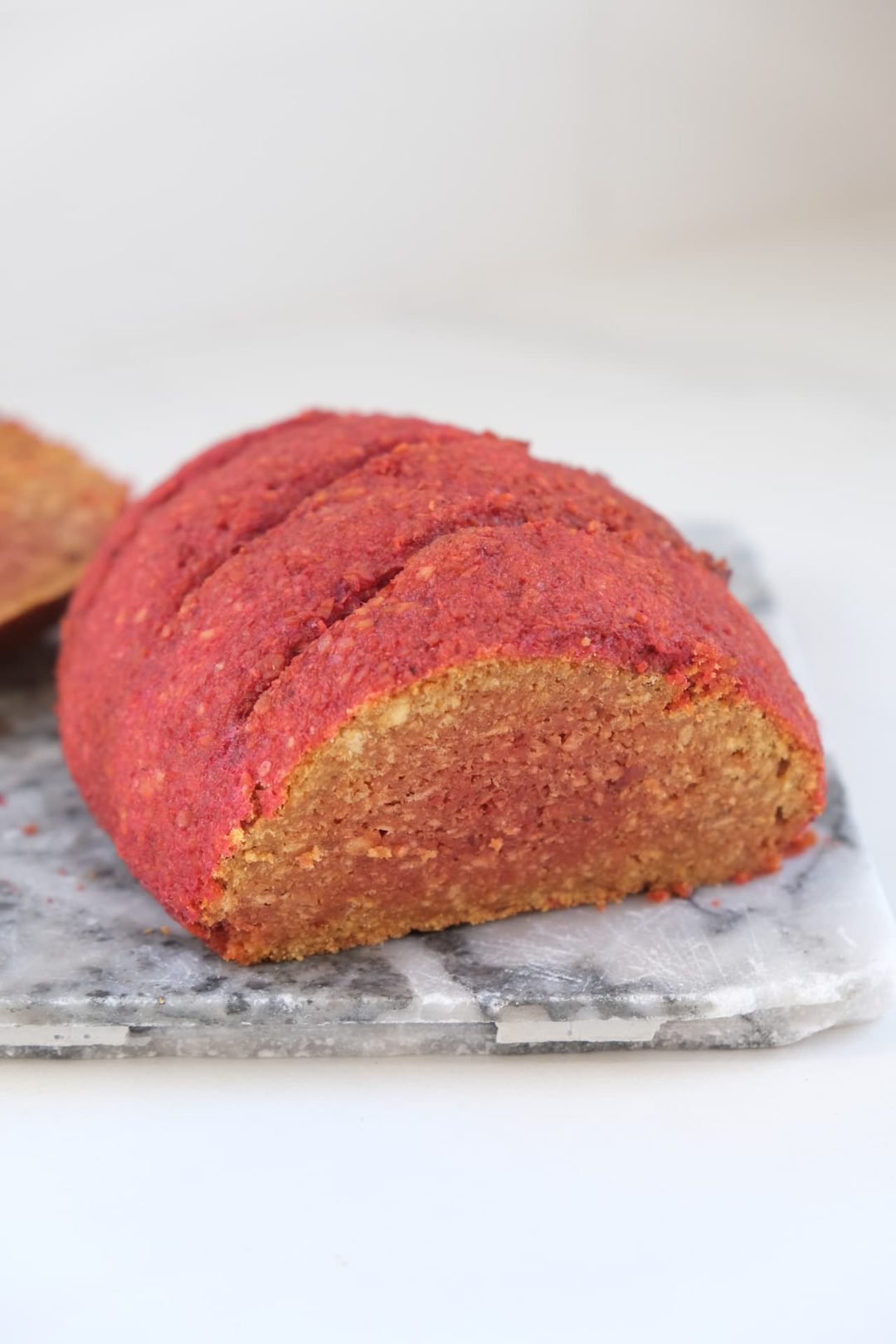
Small tip: some powders turn purplish when baked. It's harmless, it just looks odd. If it bothers you, look for a light-colored psyllium.
4 golden rules for baking with psyllium and legumes
1. Resting is part of the recipe
After mixing, let the batter rest 5–10 minutes. That's when the psyllium absorbs liquid and forms the gel — you'll see the batter thicken in front of you. Put it in the oven straight away and the network hasn't formed yet.
2. Liquids: slightly too much beats too little
Psyllium is thirsty. A batter that looks "too wet" at first will thicken while resting. But soaked or cooked legumes vary in water content, so check after resting: the right texture is a soft dough you can shape with wet hands.
3. Never slice hot bread. Ever.
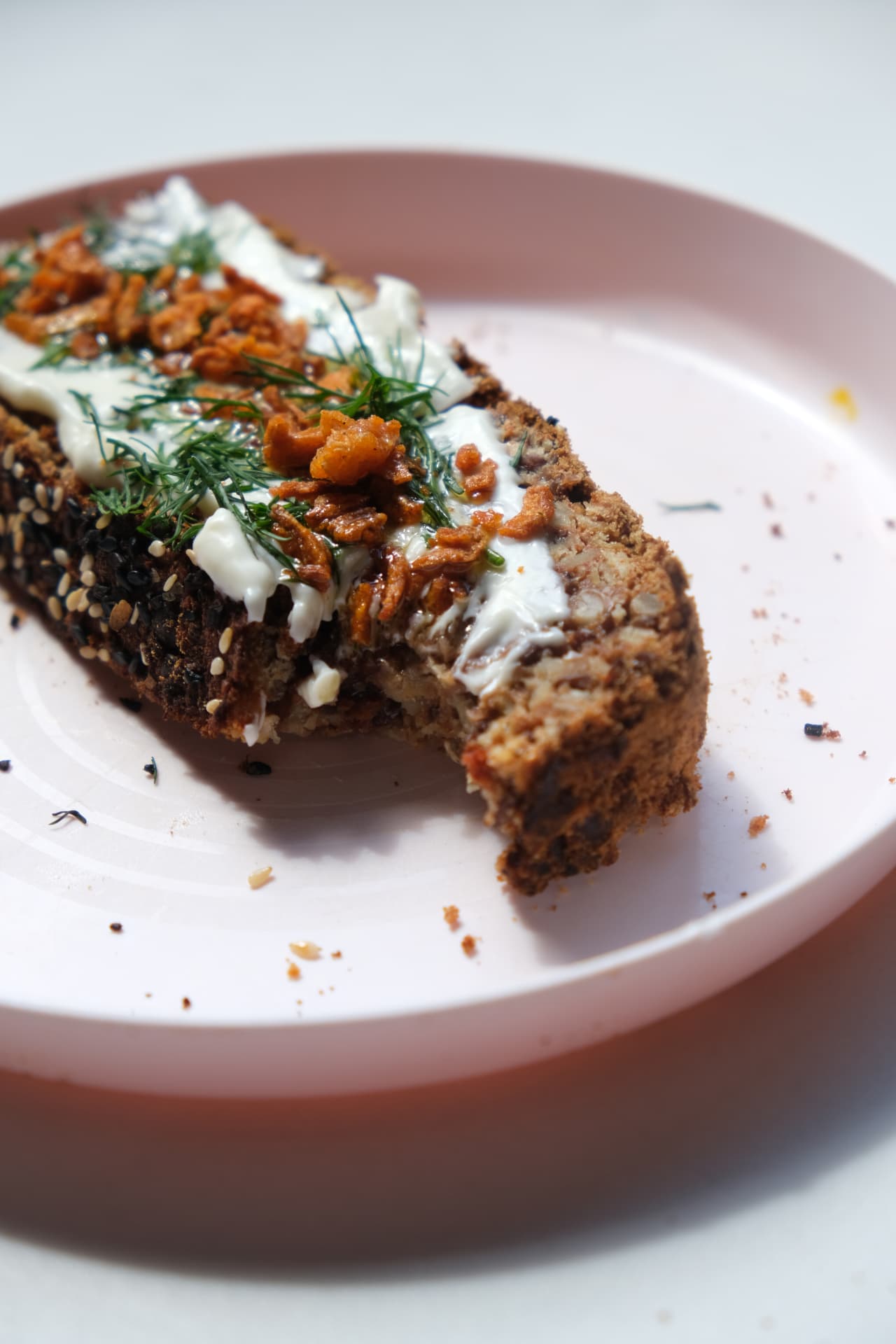
This is the hardest rule to follow, and the number-one reason for "it came out wet in the middle". As the loaf cools, the gel sets and the remaining steam escapes. Legume bread sliced hot will look gummy and underbaked even when it is fully baked. Wait at least an hour — ideally until completely cool.
4. Balance the legume flavor
Legumes can taste earthy or slightly bitter. What works for me:
- Generous salt — unsalted bread tastes flat and "beany".
- A tablespoon of apple cider vinegar or lemon juice — balances the flavor and helps baking powder rise.
- Spices and seeds — nigella, cumin, pumpkin or sesame seeds mask any leftover taste.
- Proper soaking and rinsing of dried legumes.
Can you replace psyllium?
The most common question. The honest answer: yes, but the texture will change.
- Ground flaxseed: the closest substitute. Use roughly 2–3 times the amount. The bread will be denser and more crumbly.
- Ground chia: forms a good gel, but the bread will be darker and moister. Again, about double the amount.
- Xanthan gum: works well in sweet bakes and cakes, less so in heavy legume bread. Use a very small amount.
Bottom line: for legume bread that needs to hold a slice, psyllium is still the best choice.
What does it do for your body?
Beyond baking, psyllium is an excellent dietary fiber. One tablespoon adds several grams of fiber with almost no calories. Soluble fiber supports satiety, slows how fast sugar from a meal is absorbed and supports healthy digestion. Combined with legume protein, you get a bread that is far more filling than regular bread, for fewer calories.
Two notes: if you're not used to a lot of fiber, increase gradually and drink enough water. And if you take medication regularly, separate it from psyllium by a few hours and consult your doctor.
Where to practice
Start with the recipe built exactly on these principles:
- High-Protein Green Pea Bread — the site's most popular bread.
- Lentil Protein Bread with Nuts and Seeds
- Tofu & Corn Toaster Pancakes — psyllium even without an oven.
FAQ
Why is my gluten-free legume bread gummy inside?
Usually it was sliced while still warm, or too much psyllium powder was used in a recipe written for whole husks. Let it cool fully before slicing.
Can I use whole psyllium husks instead of powder?
Yes — use about 1½–2 times the amount, or grind the husks into a powder first.
What is the best substitute for psyllium in bread?
Ground flaxseed, at roughly 2–3 times the amount, though the bread will be denser.