How Much Protein Do I Need to Build Muscle?
To maximize muscle growth, the current scientific consensus suggests consuming around 1.6 grams of protein per kilogram of body weight (or 0.73 grams per pound) daily. Athletes in a calorie deficit or those with very high training volumes may benefit from more, up to 2.2 g/kg (1 g/lb). For most people, anything above this ceiling provides no additional muscle-building benefit.
The question "how much protein should I eat a day" is one of the most common in fitness, and the answer can be confusing. In this article, we'll break down the science, explain why plant-based eaters might aim for the higher end of this range, and provide practical, actionable advice to help you hit your protein goals on a vegan diet.
The Protein Recommendation Explained: Why 1.6 g/kg?
For years, the standard RDA for protein was 0.8 g/kg. It’s crucial to understand that this guideline was designed to prevent deficiency in the general, largely sedentary population—not to optimize results for active individuals building muscle. For those performing resistance training, protein needs are significantly higher.
A landmark meta-analysis published in the British Journal of Sports Medicine reviewed dozens of studies and concluded that 1.6 g/kg/day is the point where muscle protein synthesis is maximized for most people. The researchers found a clear ceiling effect, meaning that protein intake beyond this point showed diminishing returns for hypertrophy. While amounts up to 2.2 g/kg can be useful for preserving muscle mass during a fat-loss phase, it isn't necessary for most people in a maintenance or muscle-gain phase.
Meal Distribution: The 0.4 g/kg Rule
Beyond the daily total, how you distribute your protein matters. To get the most out of your intake, the research supports consuming a dose of approximately 0.4 grams of protein per kilogram of body weight, spread across 4-5 meals. For a 165 lb (75 kg (165.3 lb)) person, that means aiming for four meals with about 30 grams of protein each (75 * 0.4 = 30).
This is tied to the "leucine threshold." Leucine is an essential amino acid that acts as the primary trigger for muscle protein synthesis (the mTOR pathway). Consuming an adequate protein dose in one sitting (generally 20-40 grams, depending on the source) ensures you hit this threshold and signal your body to build muscle. Spreading your meals allows you to trigger this process multiple times throughout the day.
Plant-Based Protein: Why Aim a Little Higher?
While you can absolutely meet your protein needs on a vegan diet, it’s helpful to understand two key differences compared to animal-based proteins:
- Digestibility: Plant protein sources contain fiber and other compounds that can slightly lower their absorption rate.
- Amino Acid Profile: While most plant sources are complete proteins (containing all nine essential amino acids), some are lower in specific ones. For instance, legumes can be lower in methionine, while grains can be lower in lysine. Leucine content can also be slightly lower than in a scoop of whey protein.
For these reasons, many vegan athletes choose to aim for the higher end of the recommended range (e.g., 1.8-2.0 g/kg) to create a buffer that ensures they are getting enough essential amino acids, especially leucine. A simple strategy is to combine different protein sources (e.g., rice and beans) and prioritize high-quality, easily digestible options like tofu, tempeh, seitan, and plant-based protein powders. For a deeper dive, check out our complete guide to plant-based protein.
Practical Examples: What Your Protein Intake Looks Like
This table shows daily protein targets and per-meal goals for different body weights, based on a 1.8 g/kg ratio.
| Body Weight | Daily Protein Target (1.8 g/kg) | Per-Meal Target (4 meals) | Example Meal |
|---|---|---|---|
| 132 lbs (60 kg (132.3 lb)) | ~108 g (3.8 oz) | ~27 g | A large salad with 5 oz (140 g (4.9 oz)) of baked tofu |
| 165 lbs (75 kg (165.3 lb)) | ~135 g (4.8 oz) | ~34 g | A bowl of lentil soup with a side of whole-wheat bread |
| 198 lbs (90 kg (198.4 lb)) | ~162 g (5.7 oz) | ~40 g | A protein shake with one scoop of pea protein and soy milk |
How to Actually Hit Your Protein Goals on a Vegan Diet
Hitting 135 or 160 g (5.6 oz) of protein per day can sound daunting, but it's straightforward with a little planning. The key is to build each meal around a primary protein source.
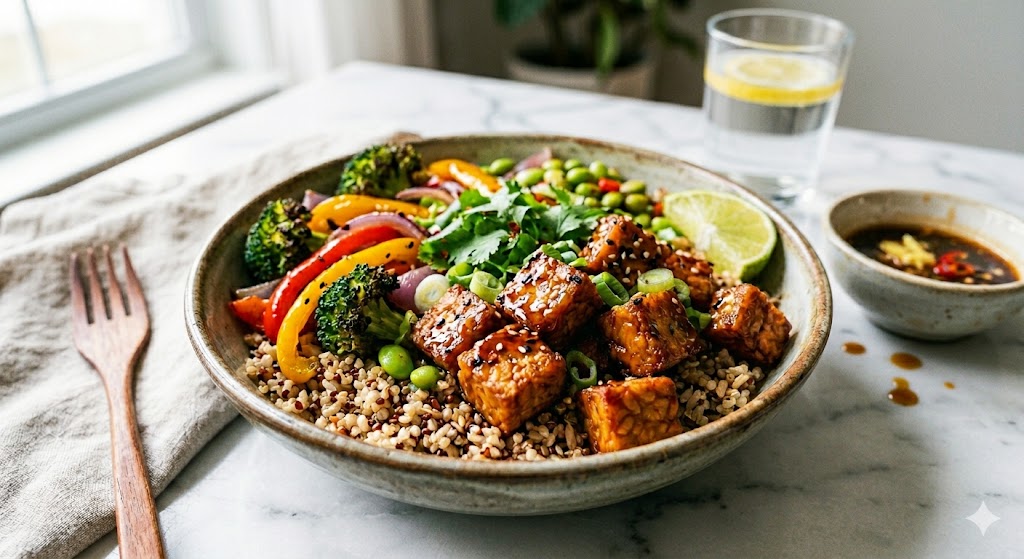
- Tofu, Tempeh, and Seitan: These are your power players. Extra-firm tofu has about 16g of protein per 3.5 oz (100 g (3.5 oz)), while tempeh has about 19g and seitan boasts an impressive 25g. They are incredibly versatile. Learn more about tempeh vs tofu or find out if seitan is healthy in our guides.
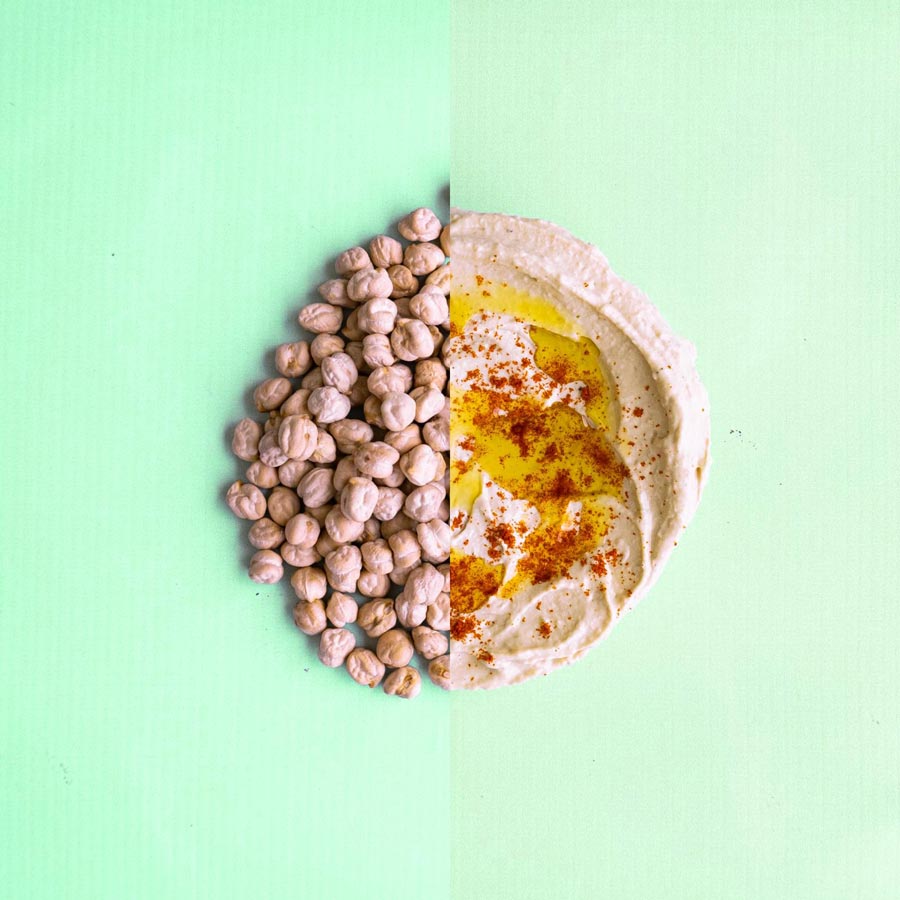
- Legumes: Lentils (~18g protein per cooked cup), chickpeas (~15g per cup), and black beans (~15g per cup) are inexpensive, fiber-rich foundations for any meal.
- Plant-Based Protein Powders: The easiest way to add 20-30g of protein to your day, especially in smoothies or oatmeal. Pea, soy, and rice protein are all excellent choices.
- Nutritional Yeast: Two tablespoons can add 5-8 grams of protein with a cheesy flavor, perfect for sprinkling on pasta, salads, or scrambled tofu.
- Soy Milk & Edamame: A cup of soy milk has about 7g of protein, making it a great base for shakes or cereal. A cup of edamame provides around 17g.
Frequently Asked Questions
What about protein needs for women or older adults?
The recommendation of 1.6-2.2 g/kg of body weight applies to all adults, regardless of gender. Women, on average, tend to have lower body weights, so their absolute protein intake may be less, but the ratio remains the same. Older adults (65+) may actually benefit from aiming for the higher end of the range, closer to 2.0 g/kg, and ensuring even protein distribution at each meal to combat age-related muscle loss (sarcopenia).
Can you eat too much protein? What happens if you go over the limit?
For healthy individuals with no pre-existing kidney conditions, high protein intake is considered safe. Your body doesn't "store" excess protein; it simply converts it to be used for energy. This means protein consumed far beyond your body's ability to use it for tissue repair is essentially just used as calories. It's not harmful, but it’s not any more effective for building muscle. You might be better off using those calories for carbohydrates to fuel your next workout.
Do you need to eat protein right after a workout?
The idea of a short, 30-60 minute "anabolic window" post-workout is largely a myth. Modern research shows that the heightened muscle-protein-synthesis response to training lasts for at least 24 hours. What's more important is your total daily protein intake and its distribution across the day. As long as you have a protein-rich meal 2-3 hours before your workout and another 2-3 hours after, you are fully optimizing recovery.
How do I know how much protein is in my food?
The most accurate method is to use a nutrition tracking app like MyFitnessPal or Cronometer for a while. After a short period of tracking, most people develop a good intuition for the protein content of their staple foods and can estimate their intake more easily.
Ready to get started? Try our free protein calculator for a personalized recommendation, or check out our high-protein vegan meal plans for more ideas and inspiration.