The Ultimate Vegan Bodybuilding Meal Plan
Building an impressive physique on a plant-based diet is not only possible, but it can also be incredibly effective and healthy. The key is proper planning. This guide will break down exactly how to construct a high-protein vegan meal plan to support your goals, whether you're on a lean bulk or a cut. We'll cover protein targets, calorie setting, meal timing, and provide full sample meal plans to get you started.
How Much Protein Do You Really Need?
For bodybuilders, the widely accepted recommendation is to consume 1.6 to 2.2 grams of protein per kilogram of body weight (or about 0.7 to 1.0 grams per pound). For example, a 180 lb (about 82 kg (180.8 lb)) athlete would aim for 126-180 g (6.3 oz) of protein daily. This range is considered optimal for maximizing muscle protein synthesis (MPS), the process by which your body repairs and builds new muscle tissue after a workout. A high protein intake also helps preserve existing muscle mass during a caloric deficit (a cut) and increases satiety.
Setting Your Calories: Lean Bulk vs. Cut
To build muscle effectively (a lean bulk), you need to be in a slight caloric surplus, meaning you consume more calories than your body burns. An excess of 250-500 calories above your Total Daily Energy Expenditure (TDEE) is a good starting point. Conversely, to lose fat while preserving muscle (a cut), you'll need a caloric deficit of about 250-500 calories below your TDEE. You can use our TDEE calculator to estimate your daily needs.
Protein Distribution and Meal Timing
It's best to distribute your daily protein intake across 4-5 meals. This ensures each meal contains 25-40 grams of protein, which helps maintain a steady supply of amino acids in your bloodstream to support MPS throughout the day. Pay special attention to leucine, an essential amino acid that acts as a primary "trigger" for the muscle-building process. High-quality vegan protein sources with complete amino acid profiles include pea and soy protein powders, tofu, tempeh, and seitan.
Sample Lean Bulk Day (Approx. 2,600 kcal, 180 g (6.3 oz) Protein)
This plan is designed for an athlete around 180 lbs (82 kg (180.8 lb)). Adjust portions to fit your own body weight and goals.
- Breakfast (8:00 AM): Protein shake with 2 scoops soy/pea protein isolate, 1 banana, 2 tbsp (30g) peanut butter, and 1.5 cups (400 ml (1 1/2 cups)) unsweetened soy milk.
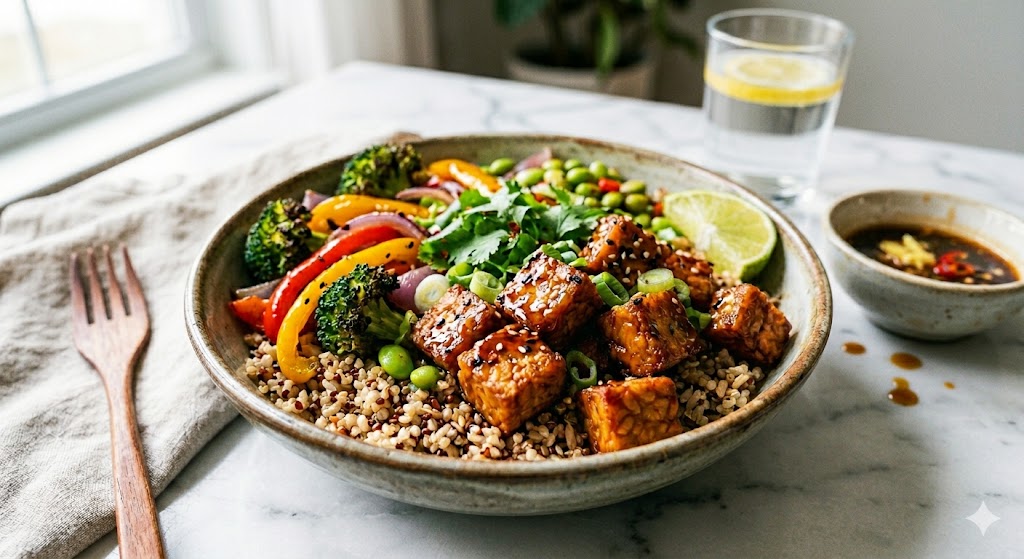
- Lunch (12:00 PM): 7 oz (200 g (7.1 oz)) of stir-fried extra-firm tofu with mixed vegetables (broccoli, bell peppers), 1 cup (150 g (5.3 oz) cooked weight) of brown rice, and a soy-ginger sauce.
- Snack (4:00 PM): 1 cup (150 g (5.3 oz)) of high-protein soy yogurt with 1 oz (30g) of walnuts.
- Dinner (7:00 PM, Post-Workout): Large bowl of chili made with 1 cup (150 g (5.3 oz) dry weight) red lentils, 3.5 oz (100 g (3.5 oz)) seitan, tomatoes, onions, served with 1 cup (150 g (5.3 oz) cooked weight) of quinoa.
- Evening Meal (10:00 PM): 1 cup (200 g (7.1 oz)) of steamed edamame.
Sample Cutting Day (Approx. 2,000 kcal, 160 g (5.6 oz) Protein)
This plan reduces carbs and fats but keeps protein high to prevent muscle loss.
- Breakfast (8:00 AM): High-protein scramble made from 1/2 cup (100 g (3.5 oz)) lentil flour with spinach and mushrooms, served with a side salad.
- Lunch (1:00 PM): Large salad with 6 oz (180 g (6.3 oz)) grilled tempeh, mixed greens, cucumber, tomatoes, and a light vinaigrette dressing.
- Snack (4:00 PM): Protein shake with 1.5 scoops of soy protein isolate and water.
- Dinner (7:30 PM, Post-Workout): 7 oz (200 g (7.1 oz)) of pea-protein-based ground "meat" served over zucchini noodles with a marinara sauce.
Training Day vs. Rest Day Adjustments
On training days, you may want to consume slightly more carbohydrates around your workout window to fuel performance. On rest days, you can slightly reduce your carbohydrate intake and increase healthy fats (like avocado and nuts) to support recovery and hormone function.
Comparing Plant-Based Protein Sources
| Protein Source | Grams of Protein (per 3.5 oz / 100 g (3.5 oz)) | Key Characteristics |
|---|---|---|
| Seitan | ~25g | Meaty texture, high in gluten. Read more on seitan. |
| Extra-Firm Tofu | ~17g | Versatile, absorbs marinades well. |
| Tempeh | ~20g | Fermented, nutty flavor. Tempeh vs. Tofu. |
| Lentils (dry) | ~24g | Excellent source of fiber and iron. |
| Pea/Soy Protein Isolate | 75-85 g (3.0 oz) | Convenient, complete amino acid profile. |
Supplements That Are Actually Worth It
- Vitamin B12: Essential for nerve function. It's not naturally present in plant foods and must be supplemented.
- Creatine Monohydrate: The most researched supplement for improving strength and power output. 5 grams per day.
- Vitamin D: Crucial for bone health and immune function, especially for those with limited sun exposure.
- Algae-Based Omega-3: Provides the essential fatty acids EPA and DHA, which have anti-inflammatory benefits.
- Protein Powder: A convenient and efficient way to help you meet your daily protein target.
Frequently Asked Questions
Can you build muscle without protein powder?
Absolutely. Protein powder is a convenience, but you can definitely meet your protein needs from whole foods like tofu, lentils, seitan, and tempeh alone. It just requires more careful meal planning.
Does soy lower testosterone?
No. This is a persistent myth. Extensive meta-analyses have concluded that soy consumption does not impact testosterone levels in men. Soy is a safe and high-quality protein source.
What should I eat before and after a workout?
Before a workout, have a small meal of complex carbs and some protein, like a banana with peanut butter. After your workout, have a protein-rich meal (at least 25g) with carbohydrates to replenish glycogen and support muscle recovery, such as a protein shake or a full dinner.
Is a vegan diet more expensive?
It doesn't have to be. A diet based on staples like lentils, beans, rice, and tofu is often cheaper than one that includes meat and dairy. Processed meat alternatives and supplements can add to the cost, but they aren't essential.
Ready to calculate your exact protein needs? Try our free protein calculator, or browse our other vegan high-protein meal plans for more ideas.