Perfect Kohlrabi Gratin
I don't know exactly what to call this recipe—is it gluten-free? (Answer: Yes)
Is it Kosher for Passover? (Answer: Also yes)
Is it low in calories? (Oh, absolutely!)
Is it vegan? (Well, obviously!)
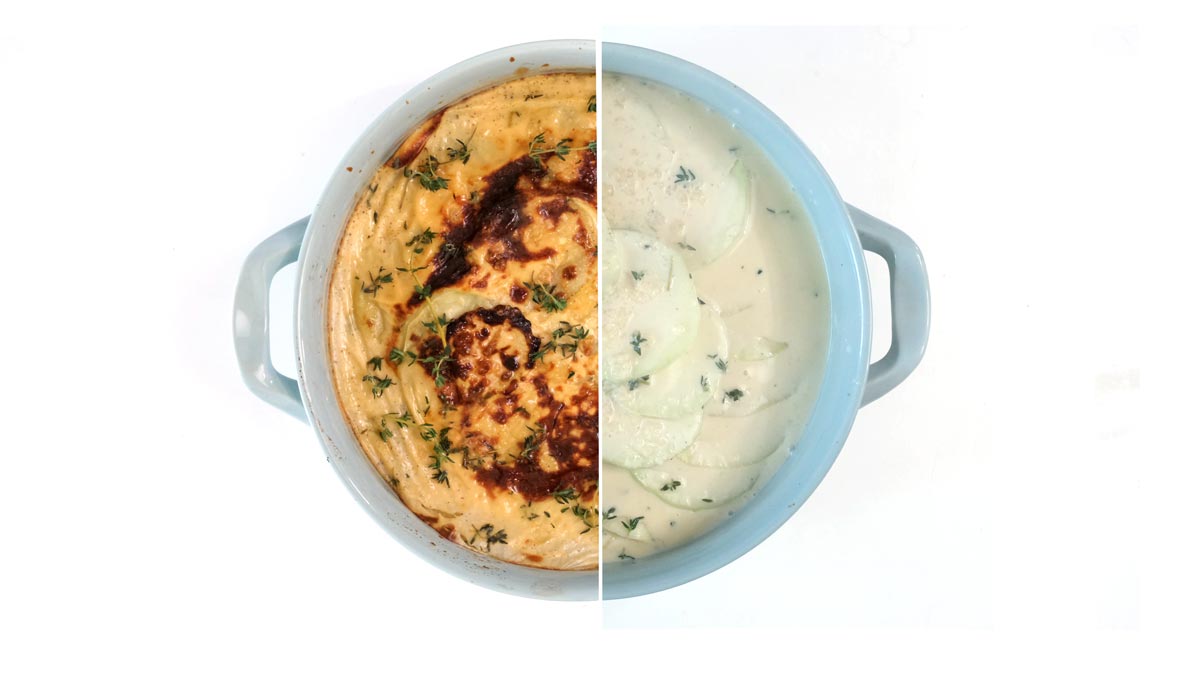
Anyway, I made a gratin and swapped the traditional potatoes for slices of kohlrabi.
The reason is a significant saving in calories and carbohydrates.
Don't believe me? See for yourself:
In 100 g (3.5 oz) of potato, there are about 80 kcal, 20g carbs, less than a gram of fat, 2g protein, and 2.4g dietary fiber.
In 100 g (3.5 oz) of kohlrabi, there are about 27 kcal, 6g carbs, less than a gram of fat, 1.7g protein, and 3.6g dietary fiber.
I think for this recipe, you can definitely swap the potatoes and get a result that isn't compromised at all.
Don't get me wrong.
I'm not against potatoes at all; I love eating them roasted in the oven with olive oil and garlic. But every now and then, it's nice to switch it up to maintain a lower calorie and carb limit—like during the holiday evenings, for example.
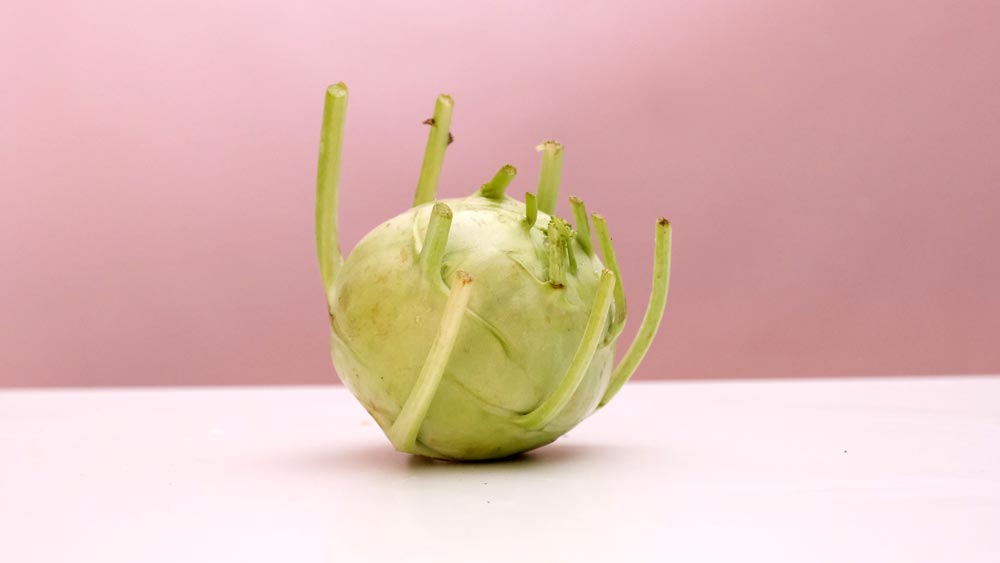
A bit about the Kohlrabi Gratin
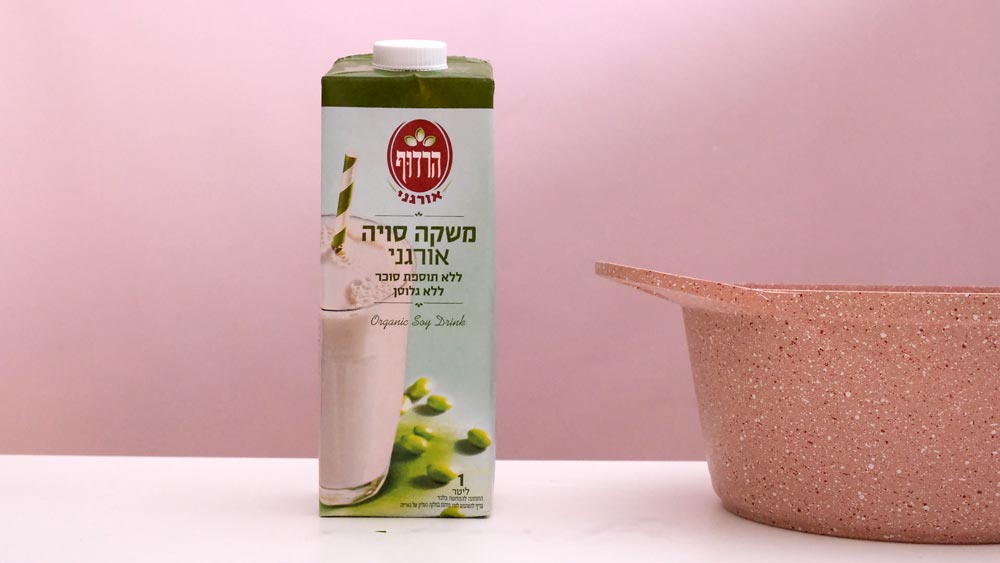
I prepared the creamy sauce—the Béchamel—using Harduf unsweetened soy milk (full disclosure: they participated in creating this recipe), which I thickened with a bit of cornstarch.
Please note that it is important to choose a soy drink with no added sugar and no sweeteners. A neutral, non-sweet taste is key.
You can replace the cornstarch with potato starch, tapioca, or any other starch flour.
Essentially, I made a roux of oil and cornstarch and slowly added the soy drink with spices until a creamy, slightly liquid sauce formed.
Now, listen closely (so there are no questions later):
The thing with this Béchamel sauce is that it doesn't contain massive amounts of oil or fat, so it needs to be cooked for a long time to thicken. The longer you cook it, the thicker it will get.
Are you still here? Great. Keep listening.
The sauce doesn't actually have to be thick for the gratin to be successful. You can absolutely stop cooking it after 20 minutes even if it’s still liquid.
Spices:
I used nutmeg, which provides a wonderful and rich flavor. (Don't skip it, it's worth it!)
In addition, I used fresh thyme and plenty of garlic. You can replace the thyme with the same amount of rosemary, oregano, or even za'atar. It will turn out wonderful.
Optional additions:
For a non-Passover version, you can add a tablespoon or two of nutritional yeast, which will give a rich cheesy flavor, or alternatively, a tablespoon of white miso or a tablespoon of Dutch mustard.
Follow me on Instagram! It's fun over there.
Nutritional values of Kohlrabi Gratin
One serving of Kohlrabi Gratin weighing 200 g (7.1 oz):
- 170 kcal
- 7g protein
- 17g carbs
- 9g fat
- 7g dietary fiber
Looking for another low-calorie recipe? How about Zucchini Ravioli?
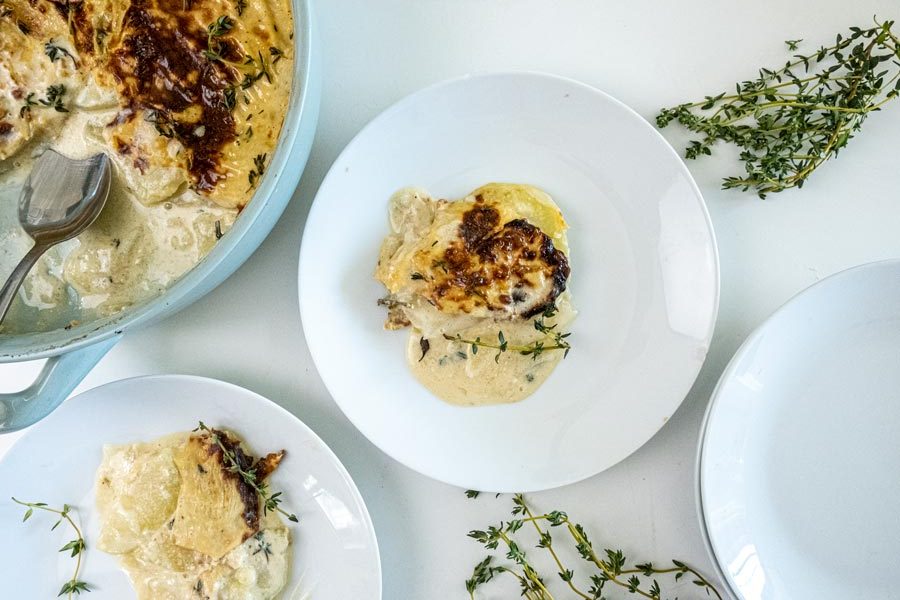
Kohlrabi Gratin
Ingredients
- 3 Kohlrabi 800 g (1.8 lb)
- 3 1/4 cups Unsweetened soy milk (Harduf) 750 ml (3 cups)
- 4 tbsp Olive oil 40g
- 4 tbsp Cornstarch 36g
- 3 Garlic cloves, crushed 20g
- 1 tsp Nutmeg 2.5g
- 1 tsp Fresh thyme leaves
- A pinch of salt
Instructions
-
Peel the kohlrabi and slice into thin slices about 5mm thick, then set aside.
-
Preheat the oven to medium heat (170°C (340°F)).
-
Heat the oil in a deep pot and add the cornstarch.
-
Stir until the oil is absorbed by the cornstarch and becomes a cream-like paste.
-
Pour in half a cup of the unsweetened soy milk and stir until you get a smooth roux.
-
Add another half cup of soy milk and repeat the process.
-
Add the rest of the soy milk along with the nutmeg, crushed garlic, thyme, and salt. Bring to a boil over low heat while stirring constantly.
-
Continue cooking while stirring constantly on low heat for about 20 minutes or until the roux thickens.
-
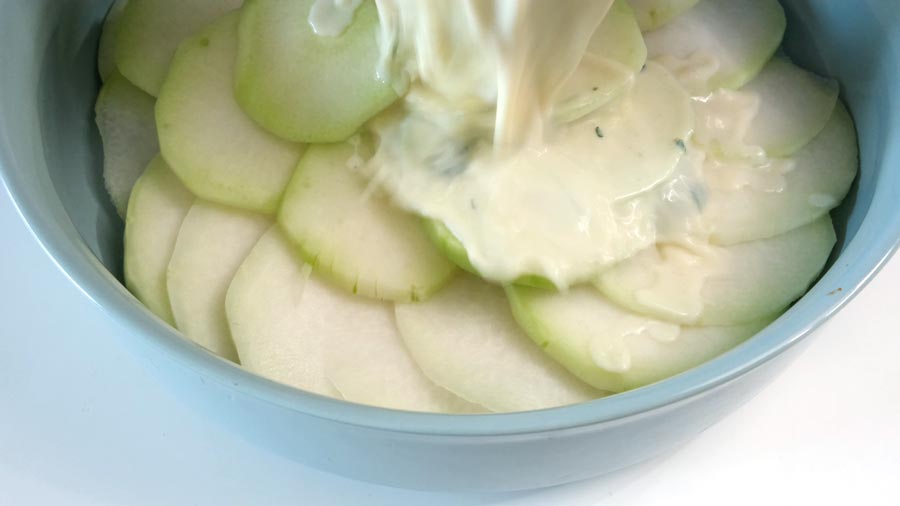
Arrange the kohlrabi in a baking dish and pour the Béchamel over the slices.
-
Bake for about 35 minutes until golden brown.
-
Before serving, generously sprinkle fresh thyme leaves on top.
-
The gratin will firm up as it cools. You can certainly prepare it a few hours in advance and reheat just before serving.
Recipe Video