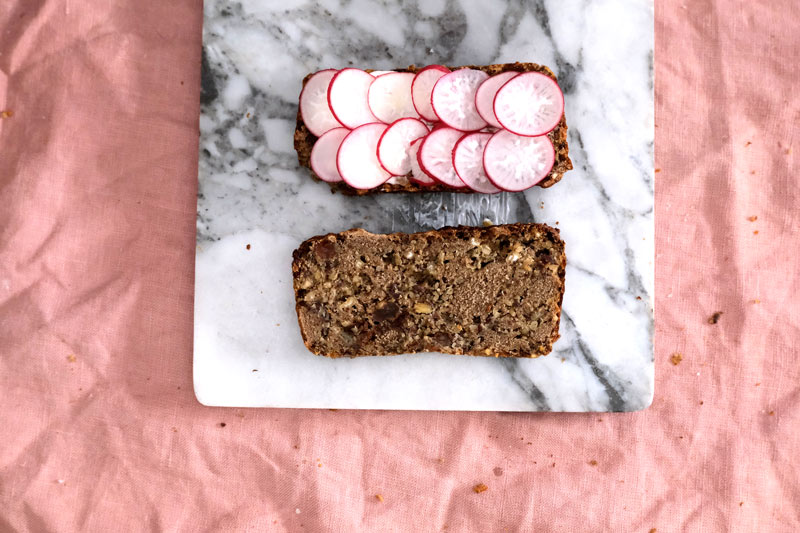
Whole Grain Rye Bread With Seeds
Over the past few years, I've stopped buying bread at bakeries and started baking it at home.
I know. That sounds like a project. That's exactly why I'm always happy to find an easy bread recipe.
When I first started poking around the world of bread baking, I discovered a whole new vocabulary: sourdough starters, fresh and dry yeast, preferments. Then there were all the techniques and seemingly endless types of flour.
My first love was whole spelt flour , which I used to make a wonderful bread that I still bake regularly.
So when Harduf (an Israeli organic food brand) approached me about developing a recipe with whole rye flour, I'll admit I was a little nervous.
My few previous attempts at whole grain rye bread had been spectacular failures.
It's a coarser flour and harder to work with than spelt, but I accepted the challenge and went online to learn everything I could about rye.
I discovered a wonderful world of dense, tangy, slow-fermented breads. The kind that take a full day to make. These breads are a staple in Scandinavia and other parts of Northern Europe.
In Denmark, there's a rye bread called rugbrød, a traditional loaf with hundreds of years of history and countless variations.
Some rugbrød recipes don't use flour at all, just rye kernels soaked for days. Others use a sourdough starter. But I managed to find a very easy version with no starter and just a little rye flour.
The process is simple and sometimes doesn't even require kneading. Just a little mixing and a long rest. I can relate.
The result is a seriously dense loaf, packed with seeds and fiber, that leaves you feeling full and fueled for a long time.
Rye, in case you were wondering, is a tough grain that can grow in challenging conditions, including low temperatures and difficult soil. It's rich in minerals, vitamins, and fiber, and it provides protein, too. Its glycemic index is very low (40).
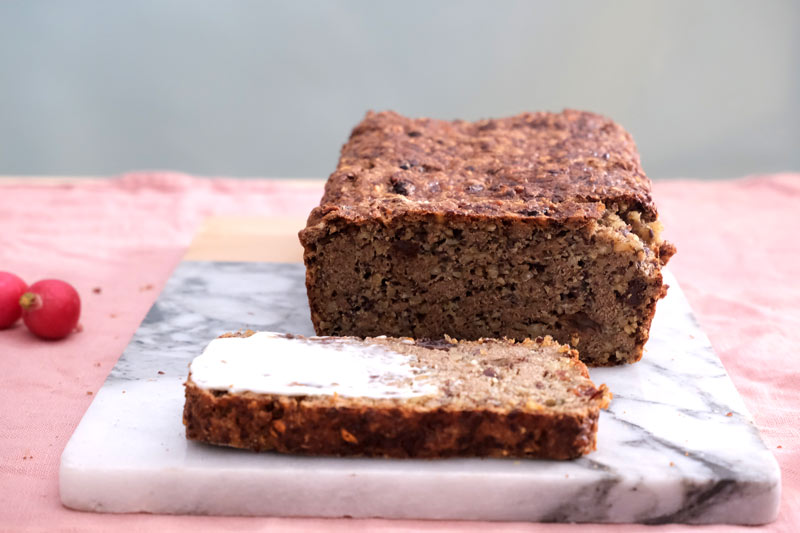
A Few Notes on This Whole Grain Rye Bread
I used Harduf's organic whole rye flour. They also partnered with me on this recipe.
Thinking about swapping in a different flour? I really don't recommend it. Pick a different recipe instead.
This recipe uses cracked rye kernels. You can substitute wheat kernels or hulled barley.
If you'd rather skip the pumpkin seeds—a shame, because they bring plenty of iron—you can use sunflower seeds instead.
Don't replace the flaxseeds. They're needed to help bind the loaf together.
Silan (date syrup) gives the bread a lovely sweetness and color. You can replace it with another sweet syrup, such as maple syrup.
I added a few raisins to the flaxseed and rye mixture, both for a lovely touch of sweetness and to help feed the yeast as the dough rises.
Whole Grain Rye Bread Nutrition
One 30 g (1.1 oz) slice, out of 20 slices, contains:
- 120 calories
- 3 g protein
- 23 g carbohydrates
- 3 g fat
- 4 g fiber
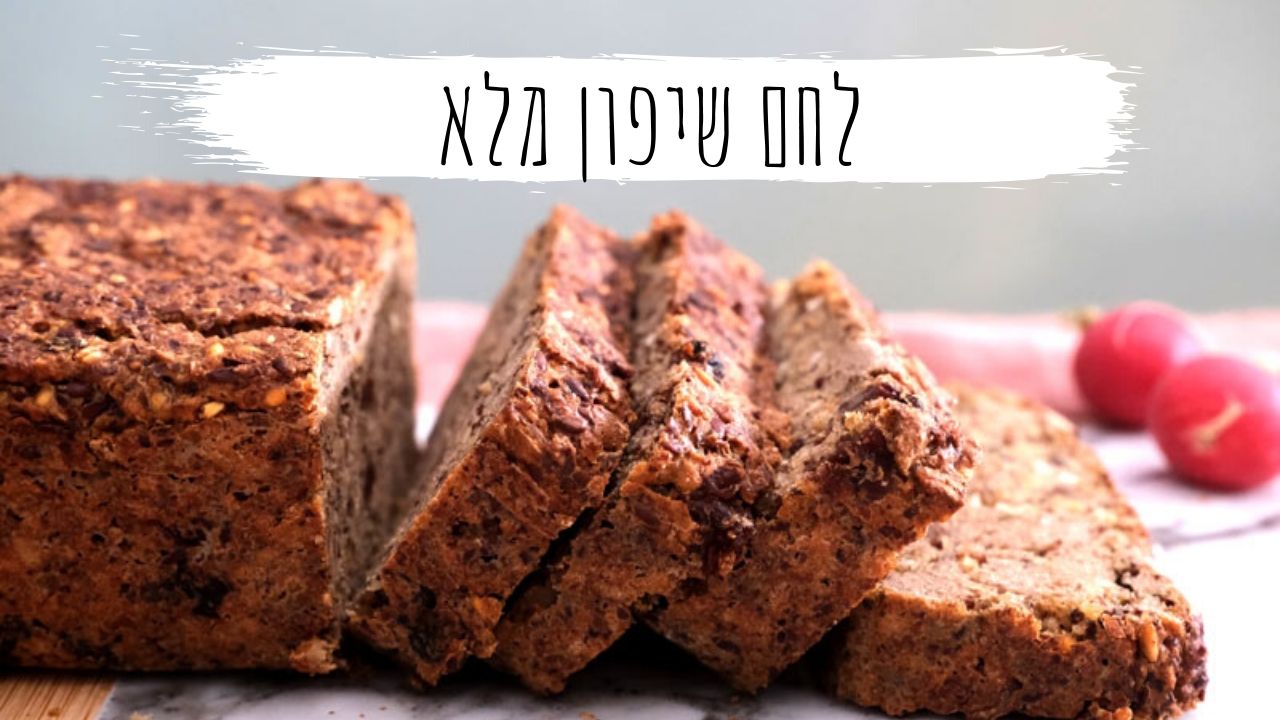
Whole Grain Flaxseed Bread With Lots of Seeds
Ingredients
- 150 g (5.3 oz) rye kernels or wheat berries, hulled barley (not pearl barley), or spelt berries
- 75 g (2.6 oz) shelled pumpkin seeds or shelled sunflower seeds
- 75 g (2.6 oz) flaxseeds
- 480 ml (about 2 cups) water
- 250 g (8.8 oz) whole rye flour (I used Harduf's organic flour)
- 1/2 tablespoon dry yeast or 1.5 tablespoons fresh yeast
- 1 tablespoon salt
- 1.5 tablespoons silan
- 1 tablespoon vegetable oil, for greasing the pan
Instructions
Day One
-
Pulse the rye kernels, flaxseeds, and pumpkin seeds in a blender until very coarsely broken up. Don't grind them finely; you just want to crack the kernels and seeds a little.
-
Transfer to a bowl and add 300 ml (about 1 1/4 cups) water. Stir, cover with a kitchen towel, and let soak for 18–24 hours.
-
In a separate bowl, mix the rye flour with the yeast, then add 180 ml (about 3/4 cup) water.
-
Mix thoroughly until you have a uniform, dry dough. No kneading needed.
-
Cover with a kitchen towel and set aside for 18–24 hours.
Day Two
-
Combine the contents of both bowls and mix thoroughly with your hands or a stand mixer.
-
Add the salt and silan and mix well.
-
Transfer the mixture to a well-greased baking pan. Let rise in a warm spot for about 2–3 hours, until doubled in size.
-
Preheat the oven to 170°C (340°F).
-
Bake the bread for about 1 hour and 20 minutes.
-
Remove the loaf from the pan, turn it upside down, and bake for about 5 more minutes.
-
Remove the bread from the oven and let it cool completely before slicing.
Recipe Video